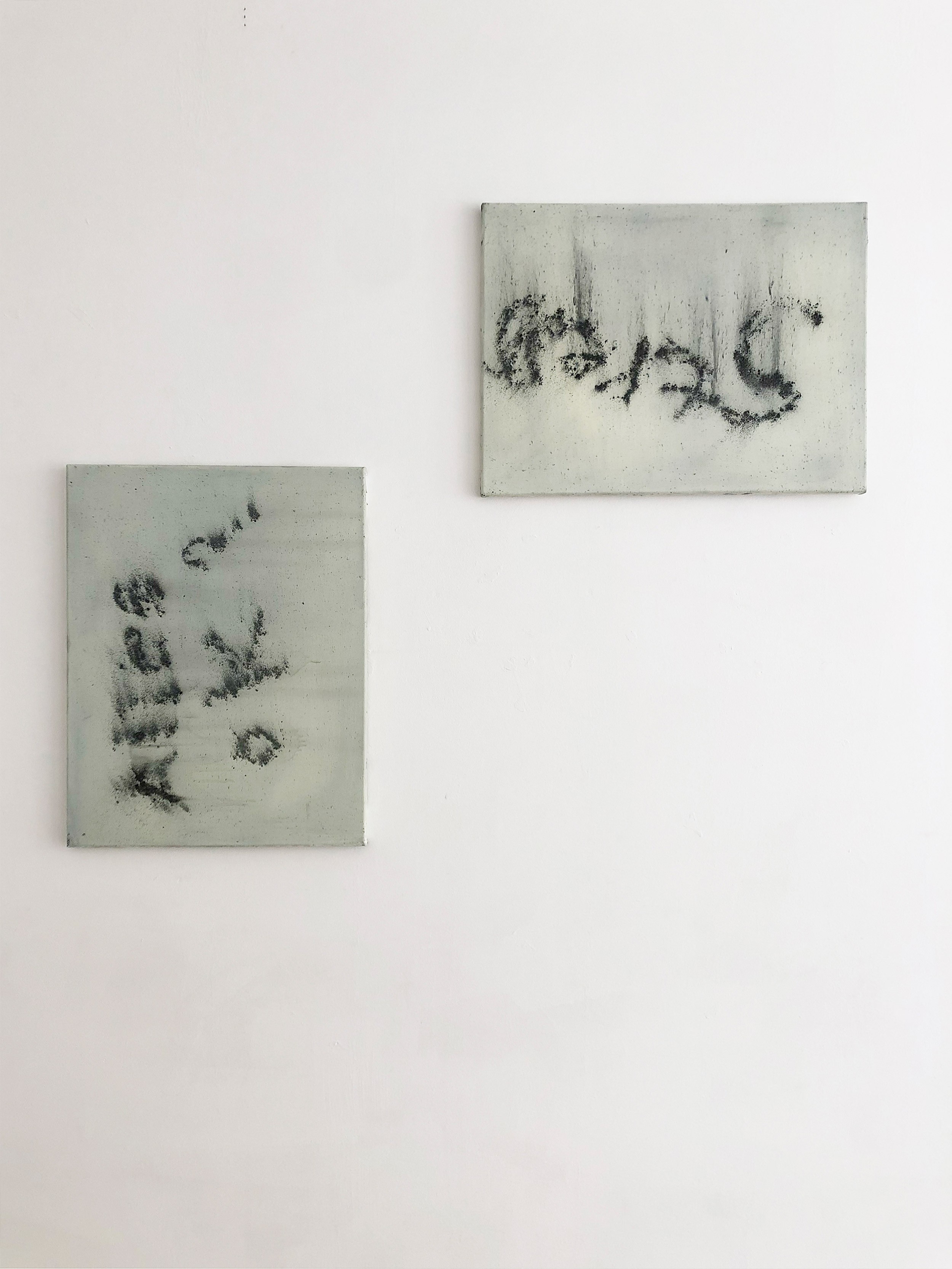
I held a handful of charcoal and let it trickle out, like sand in an hourglass, trying to write on the canvas. Even when I concentrated, the letters did not take a precise shape, and I liked that. I didn't want anyone to pick up on my confession straight away, so I hoped the writing would be hard to read.
As the marks spread, the letters blurred further, and watching that happen, I felt choked up. It wasn't a feeling I had set out to express.
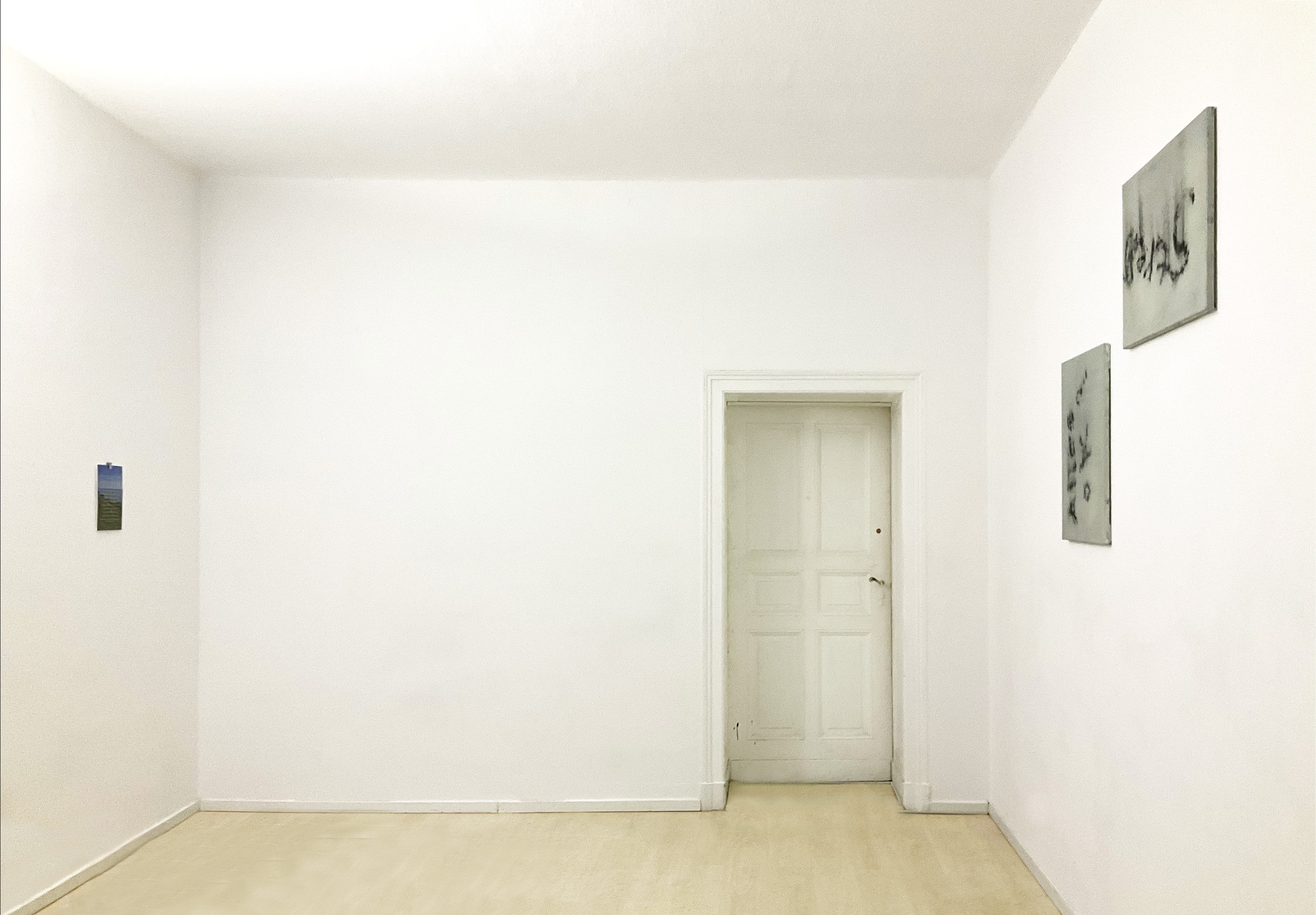
The two panels hang apart, at different heights. Following the marks on one, you end up looking over to the other.
** Artist essay — Not to Be Read at Once **
For some reason, there was a time, a period in my life, when I had no choice but to write. I also found myself looking back on things from unexpected dreams and on things that had happened in real life.
Writing, it seems to me, is a confession. It may be asking God for forgiveness, or it may be like trying, with effort, to express a love kept in secret. I wondered whether writing is what appears when the courage to reveal the most private and secret of all the many things one has kept, and the time for it, finally come together.
In hard times I only prayed inwardly, talked inwardly, and kept things to myself, but as I wrote things down, I seemed to come to know myself, little by little. Where I stood, what I might be able to let go of: I think I found hints for all of it in writing.
What matters in writing, I think, is love and care. I believe what humanity needs is for moral and reflective feelings to keep carrying on. Stirred by these feelings, there were more things I wanted to say and things I wanted to do, and so I kept asking myself, again and again: truly, for the sake of what I love, what can I give in this world, in this society, and on this land?
Jinseok Lee, 2024